College and Executive Functioning
In college there is a type of hidden curriculum or unspoken rules that involve executive functioning. is two types of hidden curriculum. One is the unspoken social rules around going to college.
Executive functions are the neurological processes in the brain (primarily the prefrontal cortex) that control our behavior and enable us to get things done. They are the “air traffic control” system of the mind. At Thames at Mitchell College, executive functioning isn’t just a concept; it is a core class and a daily practice. We believe that it should be practiced all the time. Not only do we teach executive functioning as a class, we also individualize it for each student. Then we practice it constantly in all the courses, activities, and pathways through the program. While many of the students we work with at Thames at Mitchell College are still developing their brains (that continues through their twenties), they are also learning the basic elements of college, social skills, advocating, and the work that goes into their college work and independent living.

Practical Strategies for the Semester Students at Thames build an “executive functioning toolkit”. This includes practical habits like:
• The 2:1 Rule: Budgeting two hours of study time for every one hour of class.
• Planner Use: Listing all assignments with a timeline for completion, not just the due date.
• Systematizing: Setting up binders and digital folders for every class to keep track of materials.
By mastering these skills, students move from needing constant reminders to becoming independent, college-ready learners who can manage themselves and their resources to achieve their goals.
The 6 Pillars of EF Success Our curriculum focuses on six distinct competencies that are critical for independent living and learning.
1. Impulse Control: The ability to stop and think before acting.
2. Emotional Control: Managing feelings like anxiety or frustration during high-stress times, like midterms.
3. Flexible Thinking: Adapting when plans change or obstacles arise.
4. Planning and Prioritizing: Creating steps to reach a goal and deciding what to focus on first.
5. Task Initiation: The ability to start a task without procrastinating.
6. Organization: Keeping track of materials, information, and time.
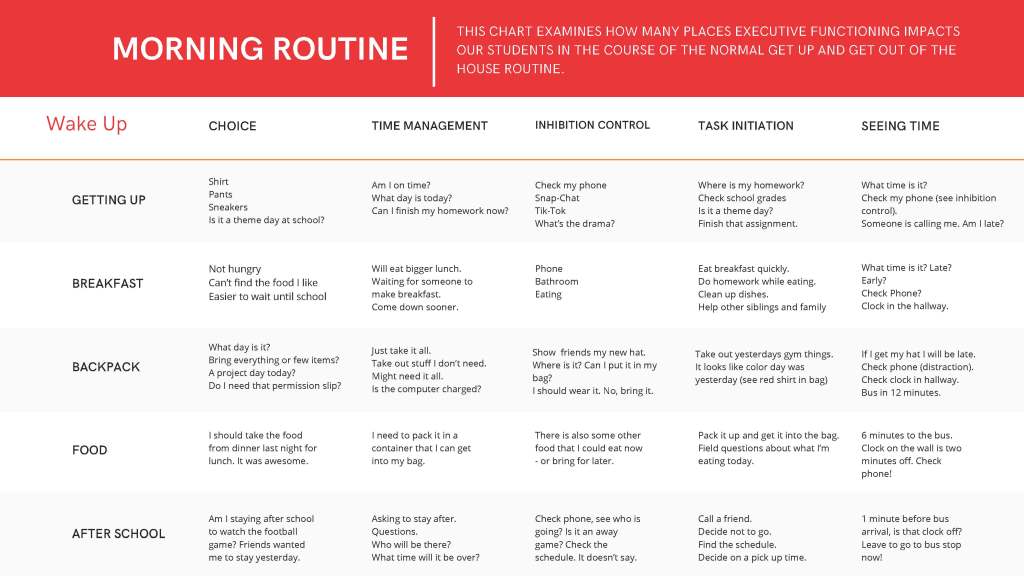
The six competencies of executive functioning are not merely academic, but they are how we make our way through life. That is why it is vital as one of the centers of our support and work in the program. Imagine all the decisions and planning that go into getting out of your home and going to high school.This just gives an example of the twenty-five possible areas that could impact how the day goes and why it goes the way it does. Some of these twenty-five can be supported with help, others fall into specific individual choices.
Practice around executive functioning is vital in how we organize and prepare for the work of college and eventually work in the world. Each student has different strengths and weaknesses. They have to practice and get confident in controlling their lives. Not only will it help them in academics, but they will be less stressed, more focused, and feel like they have more control over their lives.





Leave a comment